
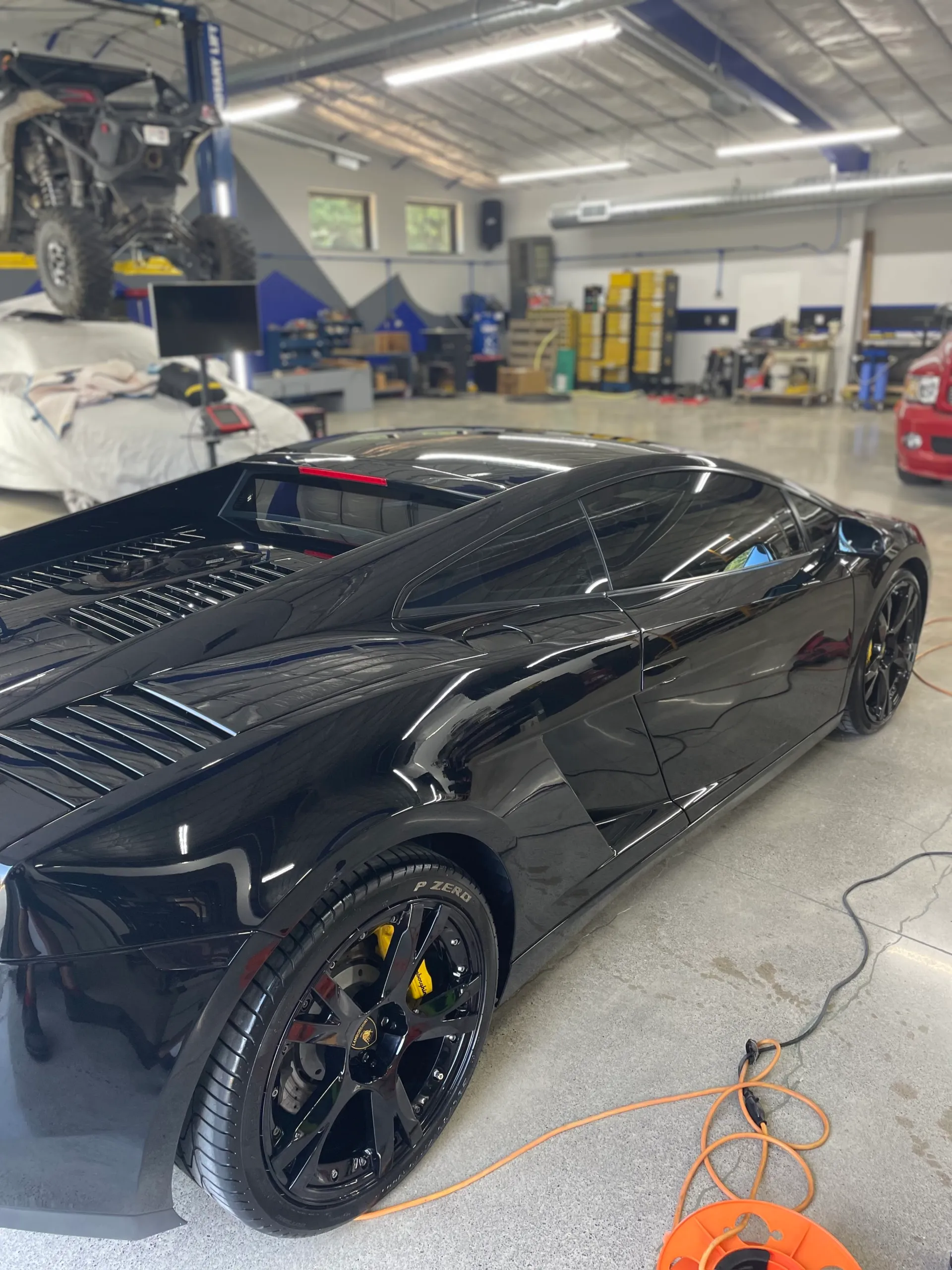
Buff and polish
Paint correction, measured in reflections
From $252 for a sedan. Swirl marks, oxidation and light scratches polished out with a dual-action machine and graded compounds.
The honest version
Clear coat is finite, and that governs everything
Polishing works by removing a small amount of clear coat so the surface is level again. There is only so much of it on your car, which is why the approach matters more than the machine.
Usually comes out
- Oxidation, the chalky, faded look on older single-stage paint
- Swirl marks from automatic car washes and dirty wash mitts
- Minor scratches that sit within the clear coat
- Paint transferred from another car's bumper or panel
- Water spot etching, if it has not gone too deep
Will not come out
- Anything you can catch a fingernail in. That has gone through the clear coat
- Scratches down to primer or bare metal
- Rock chips, which are missing paint rather than damaged paint
- Dents and creases, which are a body shop job
Nobody can promise a specific scratch will disappear without seeing the car. The fingernail test is the one you can do yourself: if your nail catches in it, it is through the clear coat and polishing cannot put clear coat back.
Two levels
One step, or two
Paint enhancement
A single polishing stage. Brings back gloss and clarity and takes out lighter swirls, without removing much clear coat. The right choice for paint in decent condition that has gone dull.
Two-step paint correction
A cutting compound through every panel to level out deeper defects, then a finishing polish to bring the gloss back up. This is the one that makes paint look better than it did new, and it is only sold alongside a full exterior detail, because correcting dirty paint grinds the dirt into it.
Which one your car needs depends on the condition of the paint and how far you want to take it. That is a conversation, not a dropdown, call and describe it, or send a photo in daylight.
Method
Dual-action, and the least aggressive thing that works
We polish with a dual-action machine rather than a rotary. A rotary cuts faster and is how paint gets burned through on an edge or a body line, the speed it saves is not worth what it risks on someone else's car.
Compounds are graded, and we start with the least aggressive one that will actually shift the defect, testing on a single panel first. If a lighter combination does the job, that is the one we use for the whole car, because every pass costs clear coat that does not come back.
On a two-step, cutting is followed by a finishing polish. Cutting alone leaves its own fine haze, skipping the second stage is how a car ends up glossy in the shop and hazy in daylight.
Worth understanding first
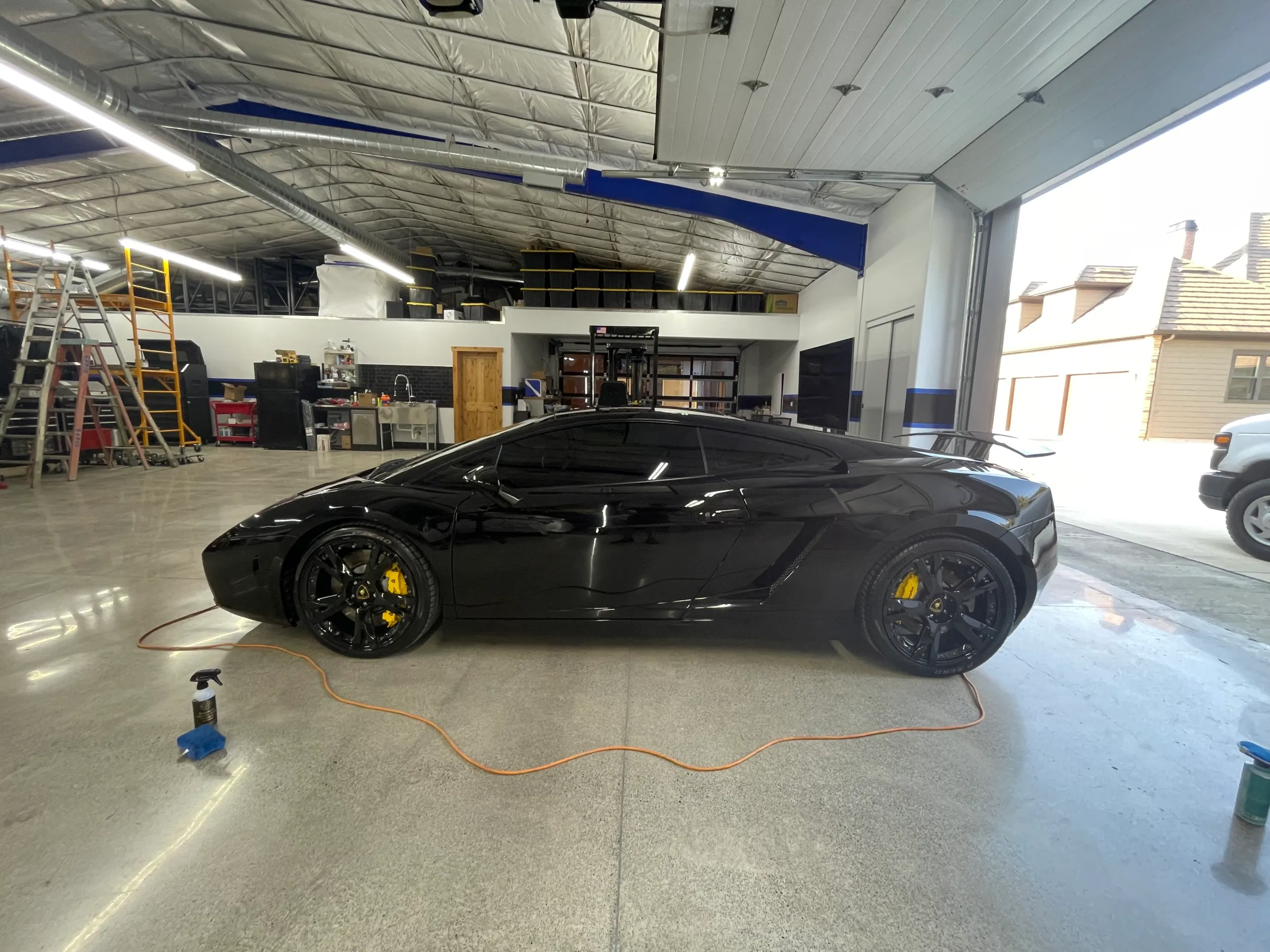
A swirl mark is a scratch you are seeing edge-on
Once you know what these defects physically are, the difference between what polishing fixes and what it cannot becomes obvious rather than something you have to take on trust.
Your paint has colour underneath and a layer of clear coat on top, and almost everything you see as a defect is damage to that clear layer rather than to the colour.
A swirl mark is a very fine scratch. What makes it look like a spiderweb rather than a line is that there are thousands of them in random directions, and sunlight catches the edge of each one. Polishing does not fill them in. It removes a few microns of clear coat from the whole panel so the surface is level again and there is no edge left to catch the light.
That is also why there is a limit. A factory clear coat is somewhere around 40 to 50 microns, a correction takes a few of those, and once it is gone the only fix is a respray. It is the reason we start with the least aggressive compound that will actually work, and test it on a single panel before committing to the car.
Almost all of it comes from washing. Automatic washes with spinning brushes are the single biggest cause, and a dirty wash mitt dragged in a circle is the second. If you have the paint corrected and then go back through a brush wash, the swirls come back within months.
Check your own paint in two minutes
- ONE
Wait for direct sun, or use a phone torch held close to the panel at night. Overcast daylight hides everything, which is why paint always looks fine in a garage.
- TWO
Look along the panel at a shallow angle rather than straight down at it. Swirls only show when the light is raking across them.
- THREE
Run a fingernail across anything that looks like a single deeper line. If it catches, that one is through the clear coat and polishing will not remove it. If it does not, it very probably will.
Send us a photo taken that way and we can usually tell you which level the car needs without seeing it in person.
The other thing that polishes out
Headlight restoration
Headlight lenses are polycarbonate with a thin factory UV coat on the outside. Sunlight breaks that coat down, and once it goes the plastic underneath oxidises: first a haze, then the yellow-brown you see on any car left outside for a decade.
It is worth fixing for a reason beyond how it looks. A clouded lens scatters the beam instead of projecting it, so the light lands as glare in front of the car rather than down the road. The bulb is doing the same work and you are seeing less with it.
The repair is the same idea as paint correction, on a different material. The oxidised layer is sanded back through progressively finer grits until the plastic runs clear, then machine polished, then sealed.
The sealing step is the one that matters. Sanding and polishing alone gives you a clear lens and bare polycarbonate, with nothing left to stop the sun doing it again. Without a fresh UV coat on top it will haze back inside a year, which is why a cheap headlight job never lasts.
It is done on its own or alongside a detail. Ask when you book and we will price it for your lenses, because how far the oxidation has gone decides how much sanding it takes.
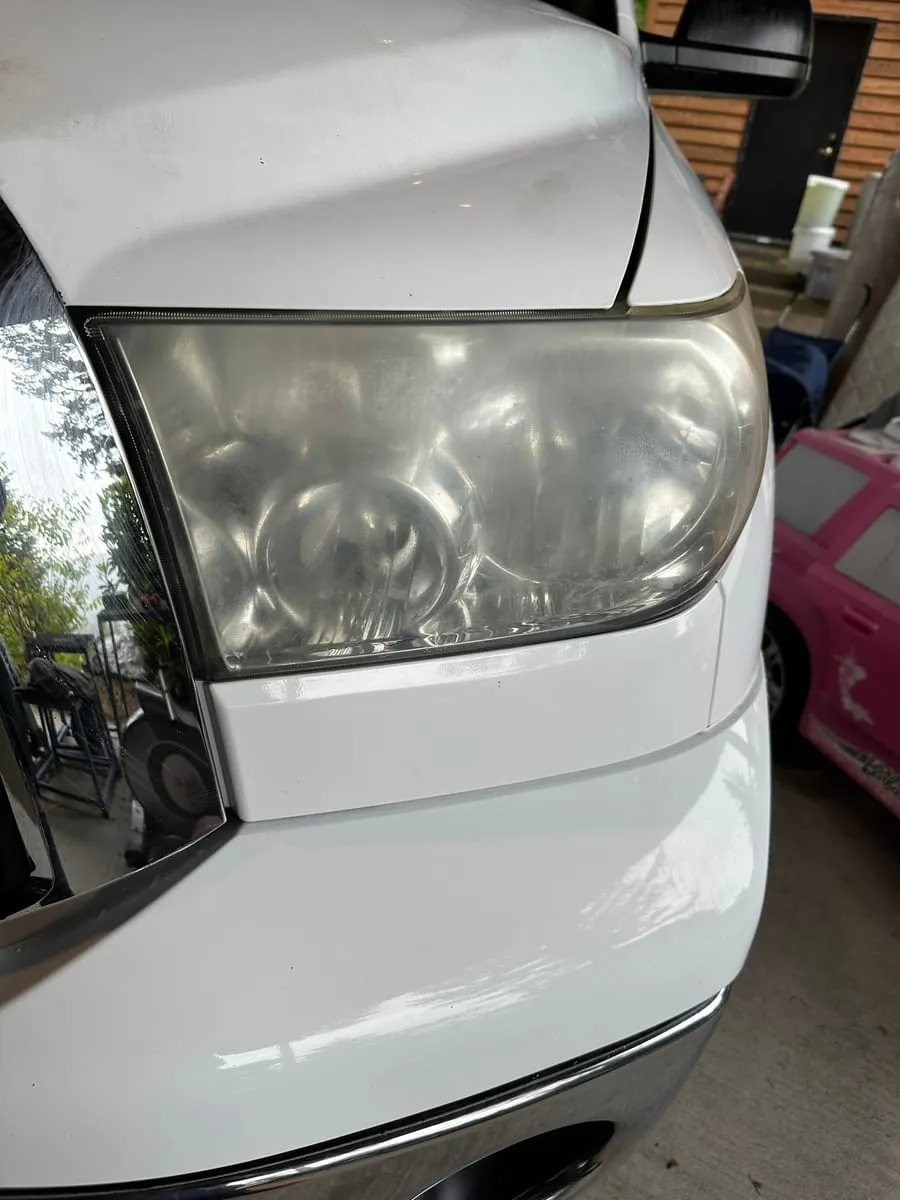
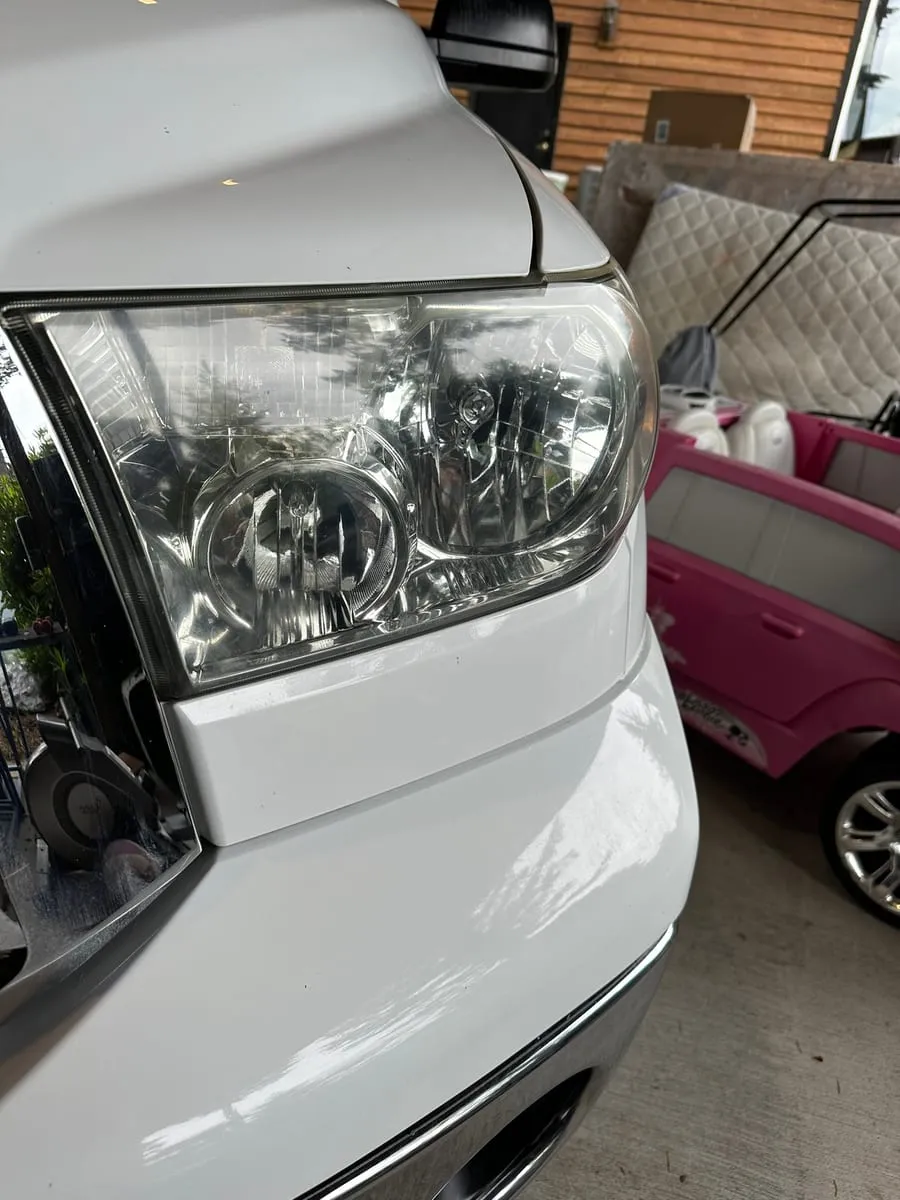
Same truck, same parking spot, same afternoon. The projector bowls inside the lens are the tell: invisible through the oxidation, sharp once it is off.
Prices
Paint correction prices
Two-step correction is quoted as a range because the price depends on the condition of the paint and how much clear coat has to be removed to meet your expectations. It is only sold alongside a full exterior detail.
| Package | SedanCars and coupes | Mini SUVSmall crossovers and 2-door trucks | Full SUVThree-row SUVs and 4-door trucks |
|---|---|---|---|
| Exterior detailOutside only, wash through to sealant. | $138 | $150 | $186 |
| Paint enhancementA single polishing step for gloss and clarity, without a full correction. | $252 | $300 | $360 |
| Two-step paint correctionAdd-on. Requires a full exterior detail. Cutting compound through every panel, then a finishing polish. Price depends on the condition of the paint and how much clear coat has to come off. | $300–750 | $360–900 | $360–900 |
Questions
Paint correction questions
Will a buff and polish get my scratches out?
No honest detailer will promise yes on a specific scratch without seeing it. With our most abrasive compound, oxidation, swirl marks, minor scratches and paint transferred from another vehicle usually come out. Anything you can catch a fingernail in has gone through the clear coat, and polishing cannot put clear coat back.
Can you coat over paint that has swirl marks?
We will not. A coating locks in whatever is underneath it for the life of the coating, so sealing in swirl marks means living with them for years. Paint gets corrected first, then coated. That is why the nine-year coating is quoted alongside correction rather than on its own.
What is paint correction?
Machine polishing that levels out the defects sitting in your clear coat by removing a microscopic amount of it, rather than filling them with something that washes out. Swirl marks, oxidation, light scratches and paint transferred from another vehicle all live in the clear coat, so levelling the surface is the only thing that genuinely removes them. Clear coat is finite, which is why no honest detailer corrects the same paint repeatedly.
How much does paint correction cost?
A one-step paint enhancement is $252 for a sedan, $300 for a mini SUV and $360 for a full-size SUV or four-door truck. A two-step paint correction runs $300 to $750 on a sedan and $360 to $900 on a full-size SUV. The two-step is a range rather than a flat rate because how far the defects go into the clear coat decides how many passes it takes, and it is sold alongside a full exterior detail rather than on its own.
Read more
More on paint and gloss
What Is Paint Correction?
What is paint correction? Machine polishing that removes defects from your clear coat rather than hiding them, what it costs, and when a car actually needs it.
Keeping a Showroom Shine
How to keep a car looking showroom-new: washing without putting swirl marks in, what sealant and coating each do, and the habits that undo both quickly.
Summer Prep for a Northwest Car
Summer here is a short dry window and the only reliable time to correct and coat paint. What the winter left behind, and the order to deal with it all in.
Send us a photo of the paint
Daylight, at an angle, so the swirls show. We will tell you which level the car needs, including when one step is enough.